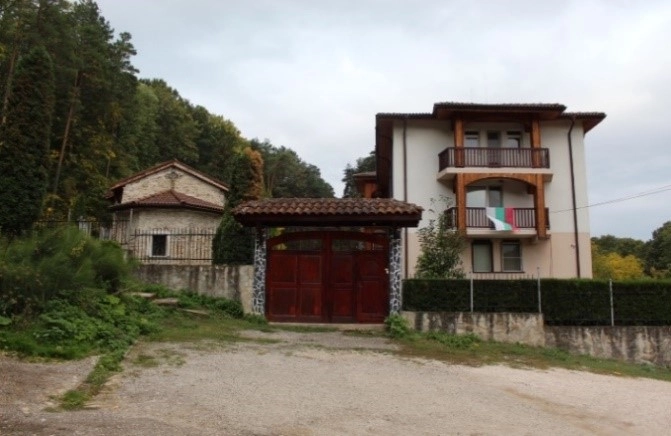


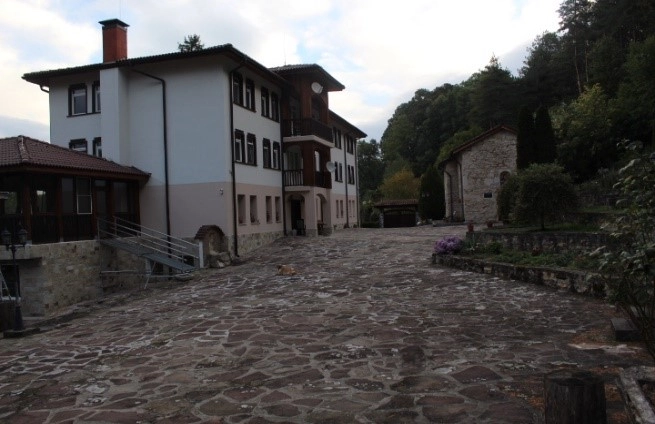
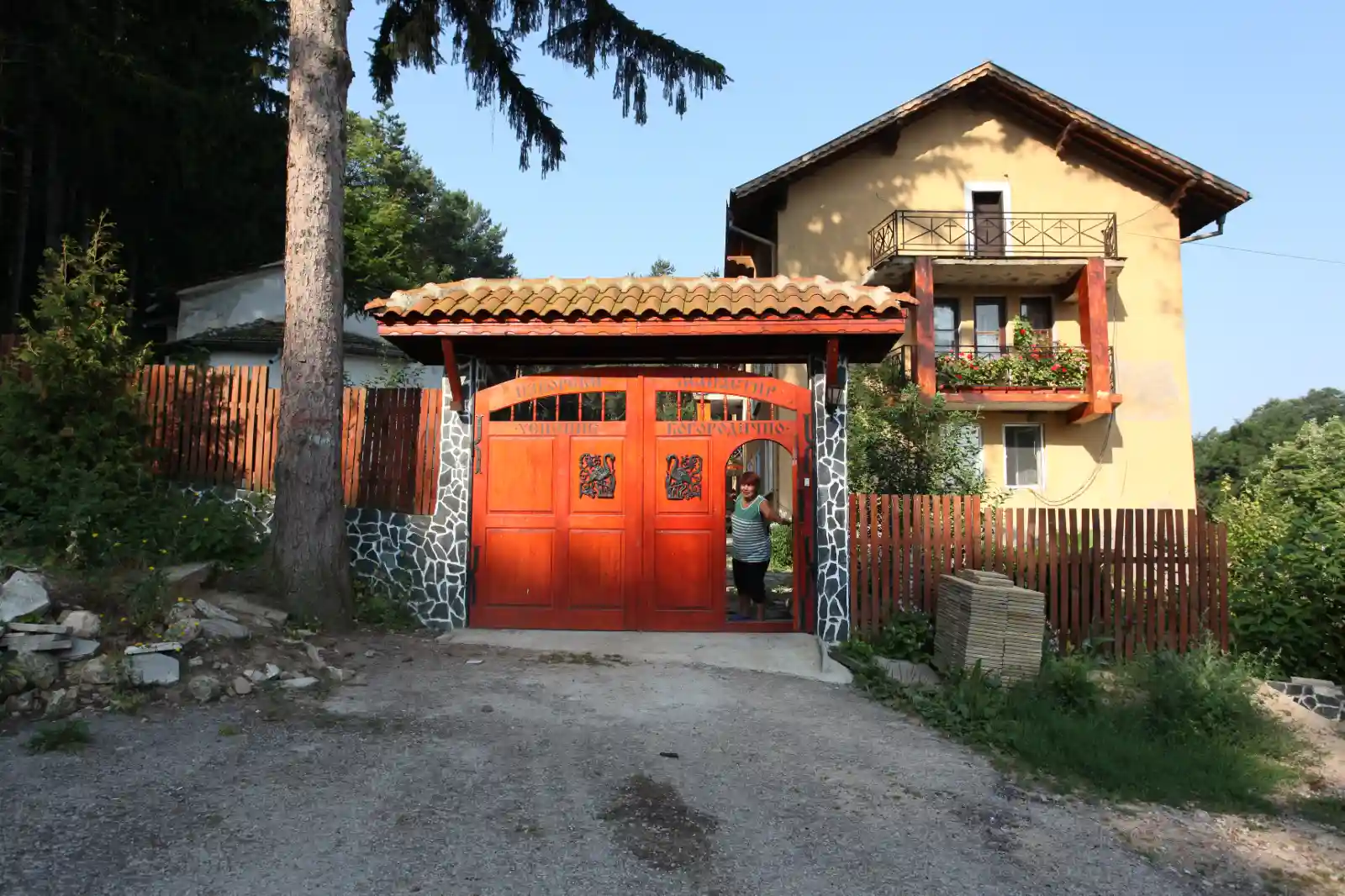
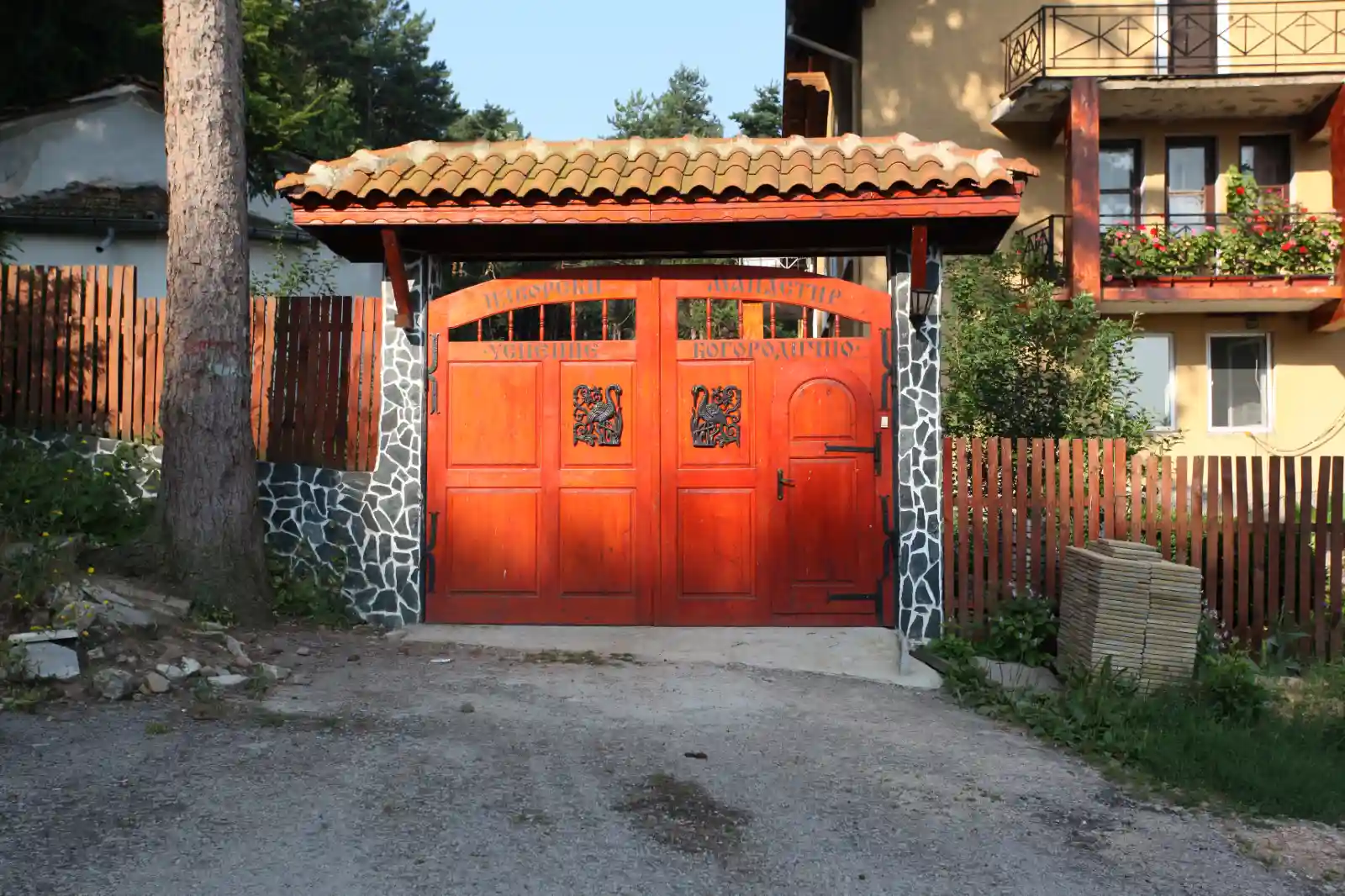

According to legend, the monastery was founded in the 12th century by the Russian prince Izvor Tavorski. During Ottoman rule, it was looted, destroyed, and abandoned. In the 17th century, its restoration began at the initiative of Hieromonk Silvester. The church iconostasis dates from 1868. The church was restored in 1923 with funds from the Diocese of Vidin and donations from believers from Vidin and Lom. The frescoes are the work of the painter Gospodin Serbezov (1873–1937).
In the mid-17th century, the Izvor Monastery was restored through the efforts of Hieromonk Silvester. According to a note found in a monastery manuscript about the life of Saint Ephrem the Syrian, the monastery was previously known as “Suho Potoče” (Dry Stream), and after its restoration it was renamed “Izvorski.” In the 18th century, residents from the surrounding villages regularly attended services at the monastery, and some prominent villagers were buried in its courtyard.
Until 1860, the Izvor Monastery was administered by abbots. The last among them, Hieromonk Agapiy, was persecuted and fled to Serbia in 1861. The remaining monks—Kiril, Gavrail, and Hrisant—built the church’s iconostasis in 1864. These three dedicated monks are buried in the monastery courtyard behind the altar.
In 1915, the Izvor Monastery received the status of a convent, and a sisterhood of three nuns and three novices was established. In 1923, the restoration of the church was completed, and it was painted by Zhelyazkov Serbezov.
Until 1965, the abbess of the Izvor Monastery was Mother Apolinariya. From 1965 to 2004, the abbess was Mother Natalia. Since 2004, the monastery has been headed by Archimandrite Vasiliy, who oversees the overall organization and maintenance of the monastery complex.
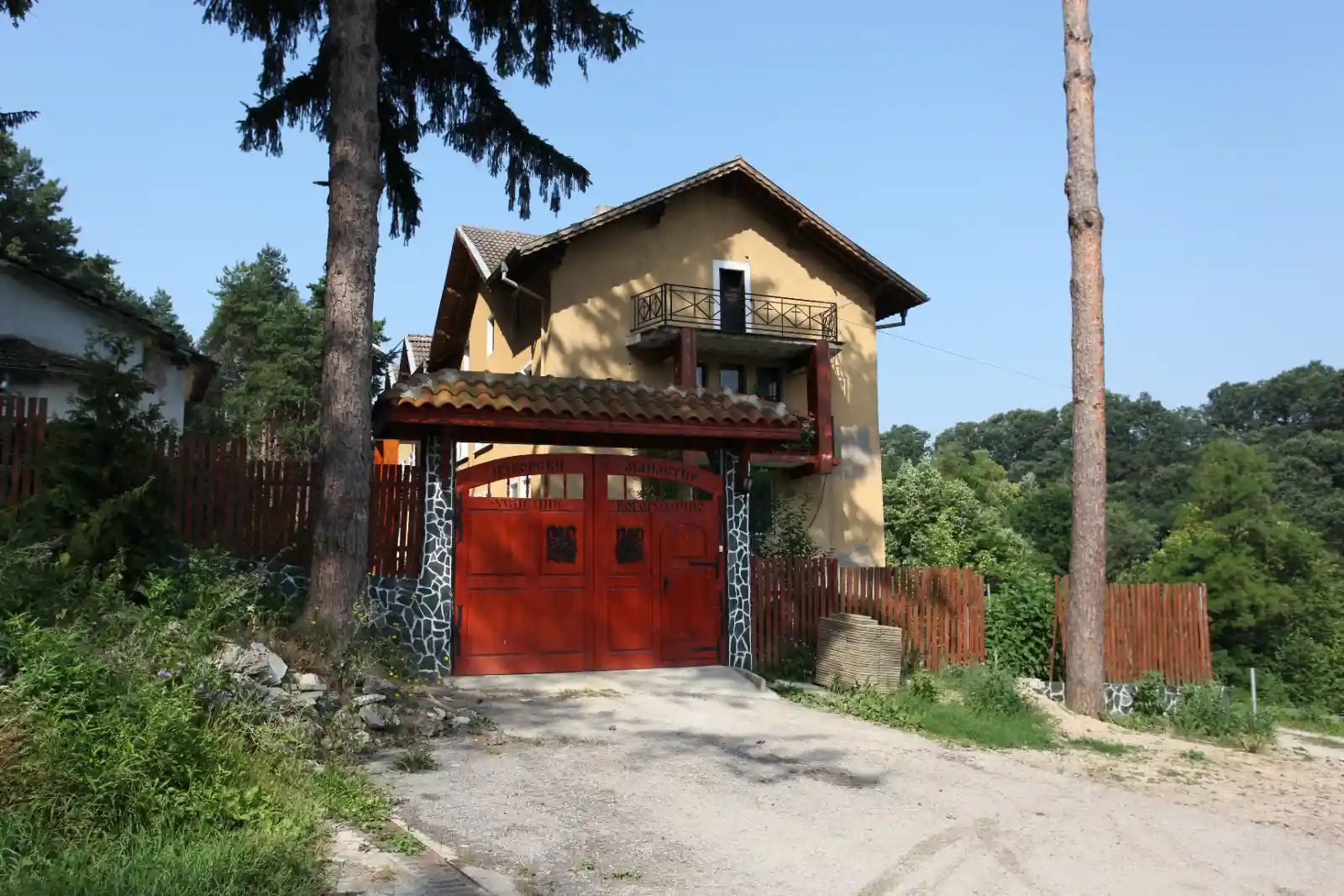
Between 1988 and 1989, a three-story monastic complex was built on the site of the former single-story building of the Izvor Monastery. The new complex includes guest rooms, water supply, sewage system, and central heating.
Artisans from the Debar Art School worked on the church. Today, the monastery is active and functions as a convent, with accommodation capacity for 20 guests. The rooms have private sanitary facilities and bathrooms. There is also a dining hall that can accommodate approximately 40 people.