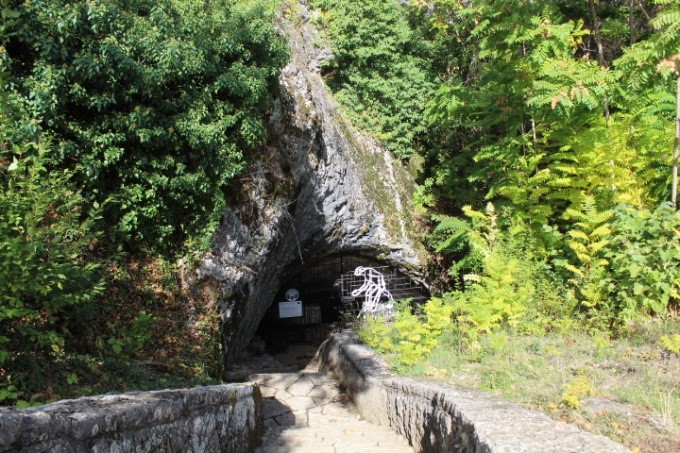




Magura Cave (officially known as Rabisha Cave from 1942 to October 24, 1972), also referred to simply as Magura, is located in Northwestern Bulgaria, in the Vidin Region, Municipality of Belogradchik. It is famous for its prehistoric cave paintings, some dating back to the Paleolithic era, as well as for its large bat population.
The cave was formed through karst processes in massive grey-white limestone from the Lower Cretaceous period. It is one of the largest caves in Bulgaria. The exit, known as Vratacha, is located 1.2 kilometers from the entrance.
The cave features numerous halls and galleries, including the Triumphal Hall, The Field, Harmana, Bat Gallery, Shooting Range, Gallery of Drawings, Whispering Gallery, Sun Hall, Hall of Stalactites, Fallen Pine Hall, Poplar Hall, Throne Hall, and Concert Hall. Some of these chambers are of colossal size. All halls are connected by galleries and tunnels, richly decorated with stalactites, stalagmites, and stalactons. A small lake can be found in the Triumphal Hall. The cave maintains a constant temperature of 12°C, and the total length of its galleries is approximately 2,500 meters.
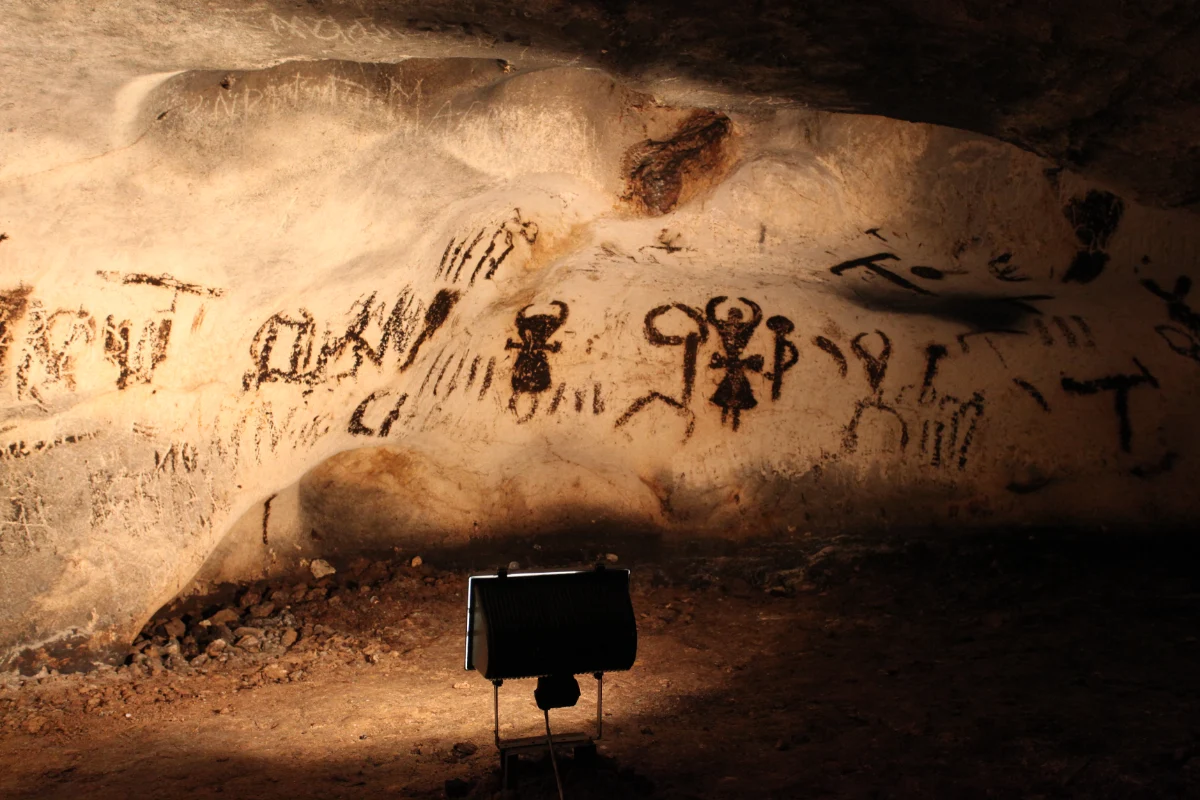
The walls of the cave display drawings from several historical periods, created using bat guano. The earliest paintings date back to the Late Paleolithic, with others from the Neolithic and the Bronze Age (between 3000 and 1200 BCE). The images predominantly depict hunting scenes, a solar-lunar calendar, and fertility symbols. Most are grouped compositions, though individual figures also exist. Some drawings appear in relief due to natural erosion of the rock beneath them.
Access to the Gallery of Drawings is currently restricted by an administrative order issued by inspectors from the Ministry of Culture.
Fossil remains of cave bears, cave hyenas, and other species have been discovered inside. The cave is also the most important bat habitat in Northwestern Bulgaria, hosting eight species throughout the year, all of which are protected at the European level:
- Greater Horseshoe Bat (Rhinolophus ferrumequinum)
- Lesser Horseshoe Bat (Rhinolophus hipposideros)
- Mediterranean Horseshoe Bat (Rhinolophus euryale)
- Geoffroy’s Bat (Myotis emarginatus)
- Greater Mouse-eared Bat (Myotis myotis)
- Lesser Mouse-eared Bat (Myotis blythii)
- Long-fingered Bat (Myotis capaccinii)
- Bechstein’s Bat (Myotis bechsteinii)
Among them, the Long-fingered Bat and the Mediterranean Horseshoe Bat are listed on the IUCN Red List of threatened species.
In addition to more than 2,000 bats hibernating during winter, a colony of over 450 Lesser Horseshoe Bats has been recorded — a national record. Above the Concert Hall, on an upper level accessible only with speleological equipment, there is a horizontal dry gallery where large summer breeding colonies of several bat species are found.