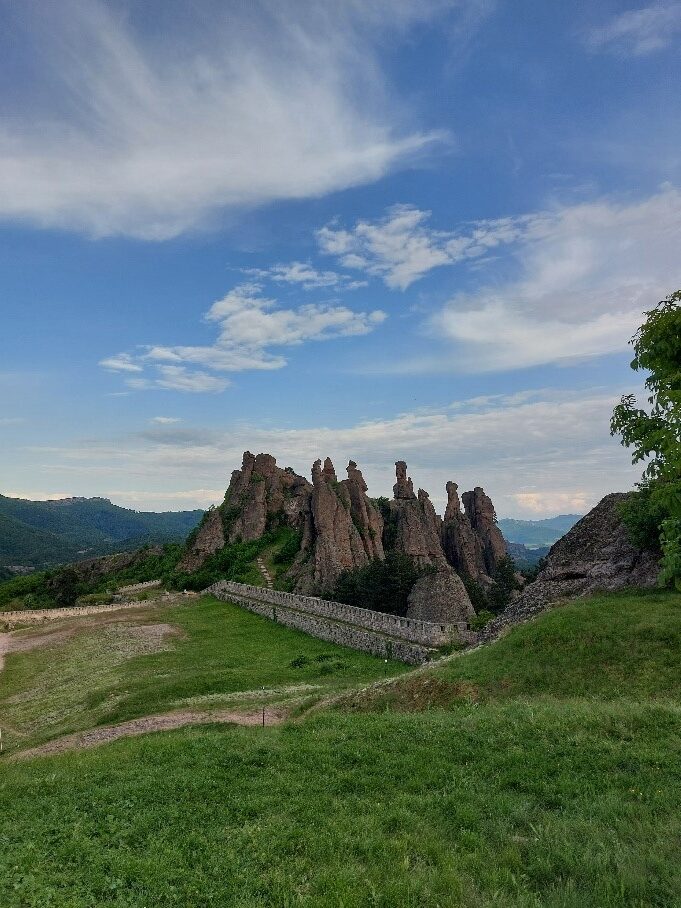

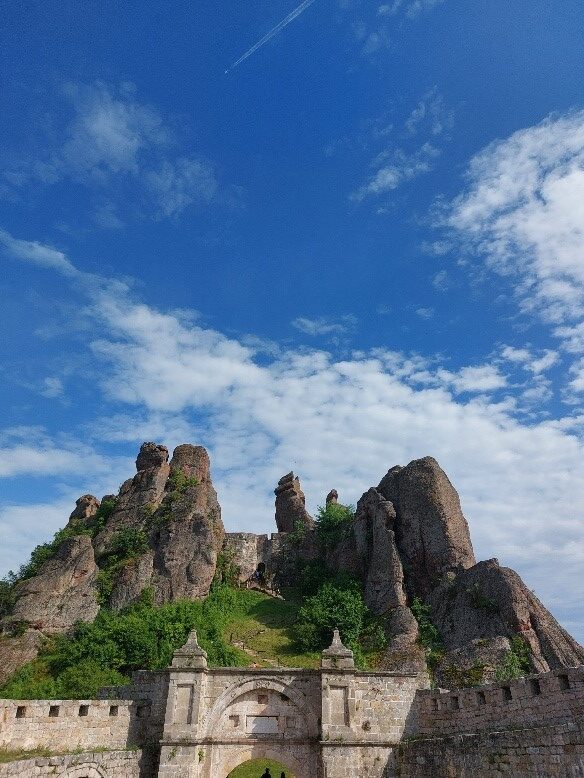
The Belogradchik Fortress (Kaleto) is the most significant historical landmark of the town of Belogradchik and one of the most striking fortresses in Bulgaria. Imposingly integrated into the red sandstone formations of northwestern Bulgaria, this fortress blends a natural phenomenon with human construction into a unique whole that leaves a powerful impression on every visitor.
The first fortifications were built as early as the 3rd century, during the Roman Empire, with the purpose of monitoring an important road connecting the city of Ratiaria with the interior of the Balkans. Over the centuries, the fortress became part of the defensive systems of the Roman and later the Byzantine Empire, and was subsequently expanded by Bulgarian rulers and Ottoman authorities. It played a particularly important role in the 14th century during the reign of Tsar Ivan Sracimir, when the fortress—then known as Belgrad—was one of the last strongholds to fall under Ottoman rule.
Kaleto Fortress consists of three inner courtyards, each capable of independent defense, and covers an area of approximately 10,200 m², with an additional detached fortification. It has two main gates—the Vidin Gate and the Niš Gate—and from its highest point, known as the First Plate, there is an unforgettable panoramic view of Belogradchik and the surrounding landscape.
Throughout history, the fortress served as a military stronghold, customs station, and refuge, and it was last used for military purposes during the Serbo-Bulgarian War. Today, it is protected as a cultural monument of national importance and is one of the best-preserved fortifications in Bulgaria.
A special charm is added by the Belogradchik Rocks, a geological phenomenon over 200 million years old. Today, the fortress is a vibrant cultural venue—hosting open-air concerts, festivals, and historical reenactments.
Belogradchik Fortress is not only a witness to a turbulent past, but also a place where history, nature, and contemporary cultural life come together in a unique experience.